Keeping your Tineco vacuum’s roller brush clean isn’t just about hygiene—it’s about maintaining peak suction power and extending your machine’s lifespan. If you’ve noticed reduced cleaning performance or strange odors coming from your Tineco, a dirty roller brush is often the culprit.
In this comprehensive guide, you’ll learn how to clean the Tineco roller properly, troubleshoot common issues, and establish a maintenance routine that keeps your vacuum running like new.
Why Cleaning Your Tineco Roller Matters
Your Tineco roller brush does the heavy lifting during every cleaning session. Hair, pet fur, dirt, and debris wrap around the bristles and accumulate inside the brush housing. Over time, this buildup:
- Reduces suction efficiency by up to 50%
- Creates unpleasant odors from bacteria growth
- Causes the motor to work harder, increasing wear
- Leads to streaking or incomplete cleaning on floors
Regular cleaning prevents these issues and ensures your Tineco performs optimally every time you use it.
Tools You’ll Need to Clean Your Tineco Roller
Before starting, gather these simple items:
- Scissors or seam ripper (for cutting tangled hair)
- Soft-bristled cleaning brush (often included with your Tineco)
- Microfiber cloth
- Mild dish soap or Tineco cleaning solution
- Warm water
- Small container or sink
- Optional: Rubbing alcohol for disinfection
Having everything ready makes the cleaning process quick and efficient.
Step-by-Step Guide: How to Clean the Tineco Roller
Step 1: Turn Off and Unplug Your Tineco
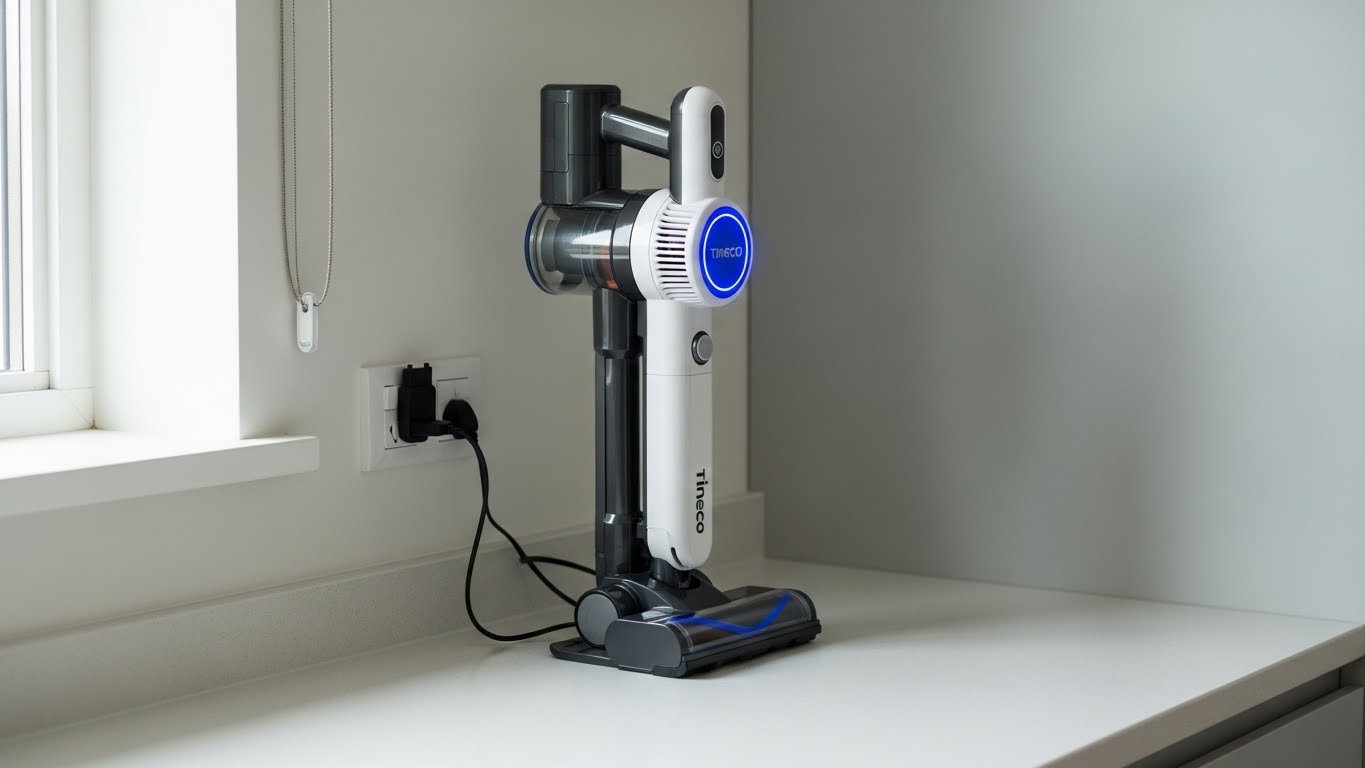
Safety first. Always power down your Tineco completely and unplug it from the charging dock before performing any maintenance. This prevents accidental activation and protects the electronic components.
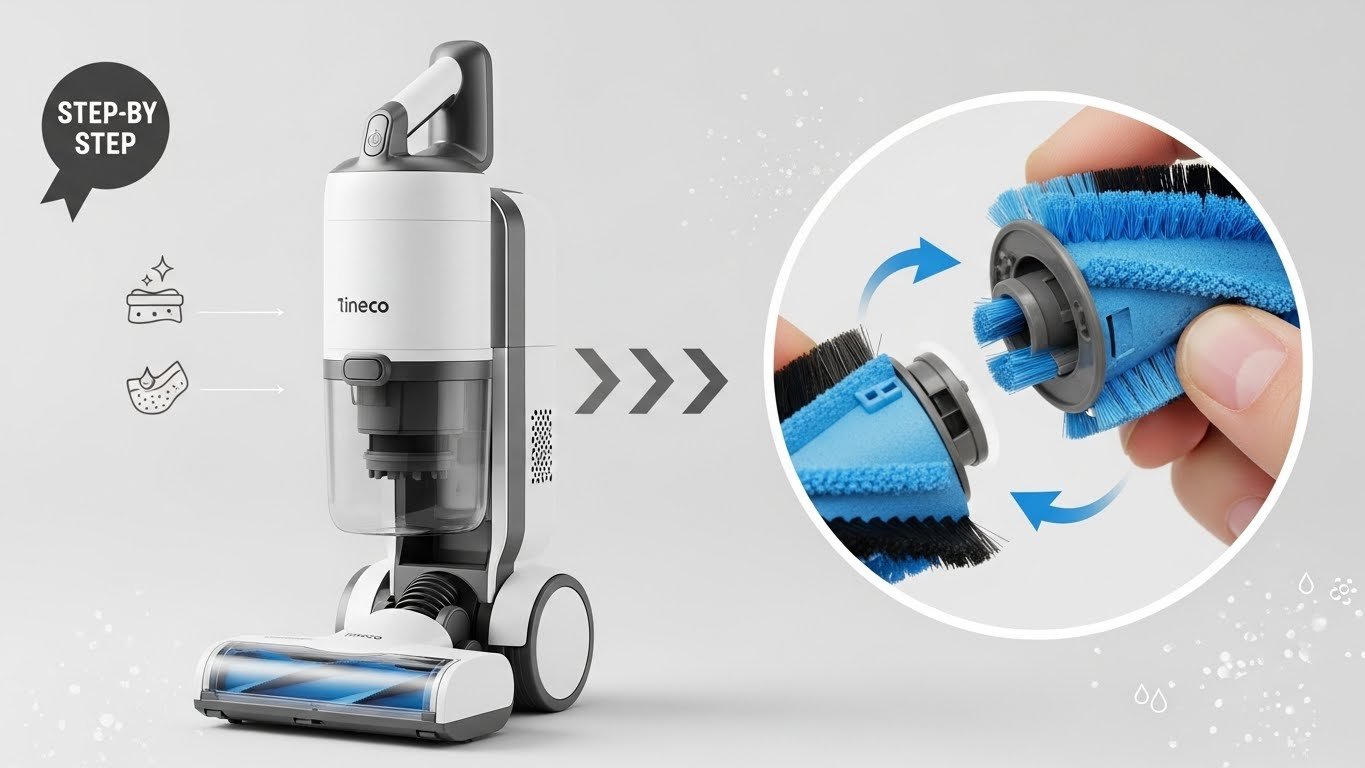
Step 2: Remove the Roller Brush Assembly
Most Tineco models feature a quick-release mechanism for the roller brush:
- Lay your Tineco flat on the floor or a work surface
- Locate the release tabs or buttons on either side of the brush head
- Press or slide the releases simultaneously
- Lift the roller brush assembly straight out
For models like the Tineco Floor One S3, S5, S6, or iFloor series, the process is nearly identical. Check your user manual if you’re unsure about your specific model.
Step 3: Remove Loose Debris and Hair
Before washing, remove the bulk of accumulated debris:
- Use scissors to carefully cut through hair and fibers wrapped around the roller
- Make cuts along the length of the roller, not across the bristles
- Pull away loosened hair, strings, and large debris by hand
- Use the cleaning brush to sweep away dust and dirt from the bristles
Take your time here—removing dry debris first makes the washing process much more effective.
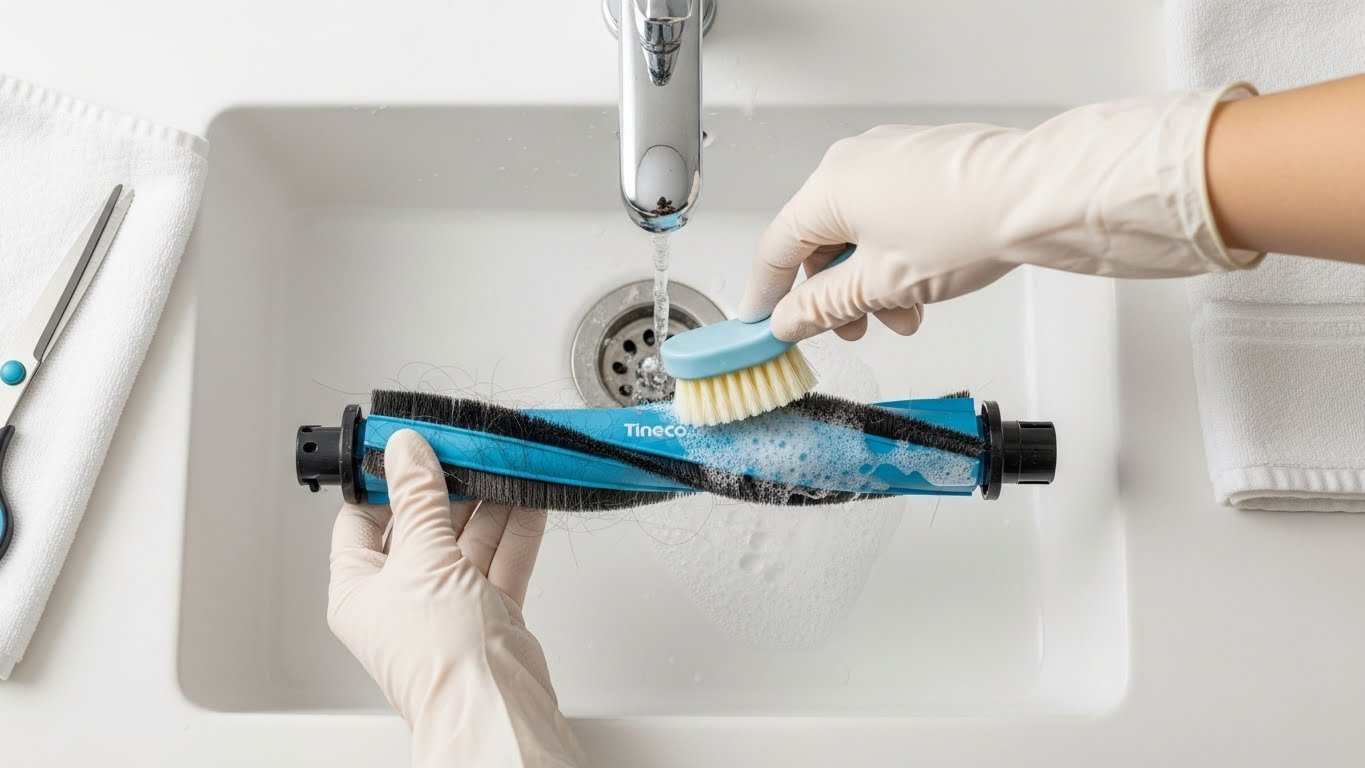
Step 4: Wash the Roller Brush
Now it’s time for a thorough cleaning:
- Fill a sink or container with warm water
- Add a few drops of mild dish soap or Tineco’s cleaning solution
- Submerge the roller brush and gently agitate it
- Use the soft-bristled brush to scrub between the bristles
- Pay special attention to the ends where buildup accumulates
- Rinse thoroughly under running water until no soap remains
For stubborn odors or stains, let the roller soak for 10-15 minutes before scrubbing.
Step 5: Clean the Roller Housing
Don’t forget the cavity where the roller sits:
- Wipe the inside of the brush housing with a damp microfiber cloth
- Remove any visible debris or buildup
- Use a cotton swab for tight corners
- Dry thoroughly with a clean cloth
A clean housing prevents immediately re-contaminating your freshly cleaned roller.
Step 6: Dry Completely Before Reinstalling
This step is critical:
- Shake excess water from the roller brush
- Pat dry with a clean towel
- Place the roller in a well-ventilated area
- Allow at least 24 hours for complete air drying
Never reinstall a damp roller—moisture can damage the motor and promote mold growth.
Step 7: Reinstall the Roller Brush
Once completely dry:
- Align the roller with the slots in the brush head
- Press firmly until you hear a click
- Ensure the roller spins freely when manually rotated
- Test your Tineco on a small area to confirm proper installation
How to Clean Different Tineco Roller Types
Hard Floor Roller vs. Multi-Surface Roller
Tineco offers different roller types for specific cleaning needs:
1. Soft Roller Brush (Hard Floors): This fluffy roller requires gentle handling. Avoid harsh scrubbing that could damage the microfiber material. Hand-squeeze soapy water through the roller rather than using a stiff brush.
2. Multi-Surface Roller (Carpet & Hard Floors): These bristle rollers can withstand more aggressive cleaning. You can scrub firmly to remove embedded dirt without worrying about damage.
Cleaning the Tineco Floor One Series Rollers
The Floor One series features a unique dual-chamber roller system:
- Clean both the main roller and the smaller rear roller
- The rear roller often collects more hair—give it extra attention
- Some models have self-cleaning modes that help maintain the roller between deep cleans
Run the self-cleaning cycle after each use, but still perform manual cleaning weekly or bi-weekly depending on usage.
How Often Should You Clean Your Tineco Roller?
Cleaning frequency depends on your usage and environment:
Light Use (1-2 times per week):
- Deep clean the roller every 2-3 weeks
- Quick debris removal after each use
Moderate Use (3-4 times per week):
- Deep clean weekly
- Remove visible hair and debris after each session
Heavy Use (Daily cleaning) or Pet Owners:
- Deep clean every 3-4 days
- Check and remove hair after every use
- Consider keeping a spare roller to rotate
If you notice reduced performance or odors, clean immediately regardless of your schedule.
Common Tineco Roller Problems and Solutions
1. Roller Won’t Spin or Spins Slowly
Possible causes:
- Hair wrapped around the roller ends
- Debris blocking the brush housing
- Worn bearings
Solution: Remove and thoroughly clean the roller, focusing on the end caps. Check for objects lodged in the housing. If the problem persists after cleaning, the roller may need replacement.
2. Unpleasant Odors from the Roller
Possible causes:
- Bacteria growth from moisture and debris
- Mold in the housing
- Dirty water left in the system
Solution: Deep clean with a mixture of water and white vinegar (1:1 ratio). Disinfect the housing with rubbing alcohol. Always empty dirty water tanks immediately after use and allow all components to dry completely.
3. Streaking or Poor Cleaning Performance
Possible causes:
- Matted or flattened bristles
- Accumulated residue on the roller
- Worn-out roller brush
Solution: Clean the roller thoroughly to restore bristle texture. If bristles remain flat or the roller shows visible wear, it’s time for a replacement. Tineco recommends replacing rollers every 3-6 months with heavy use.
4. Roller Keeps Getting Tangled Quickly
Possible causes:
- Long hair or pet fur in the environment
- Cleaning over large debris
Solution: Pre-vacuum larger debris with a regular vacuum. Consider trimming pet hair or keeping hair tied back during cleaning. Some users install a rubber band on the roller to catch hair more easily (though this isn’t officially recommended).
Maintaining Your Tineco Roller Between Deep Cleans
Quick Post-Use Maintenance
Spend 30 seconds after each cleaning session:
- Remove the roller and pull away visible hair
- Wipe down the roller with a damp cloth
- Check the housing for blockages
- Return the roller to the unit
This simple routine dramatically reduces buildup and extends time between deep cleans.
Run Self-Cleaning Cycles
If your Tineco model has a self-cleaning function:
- Use it after every cleaning session
- Add fresh water and cleaning solution to the tank
- Let the cycle run completely
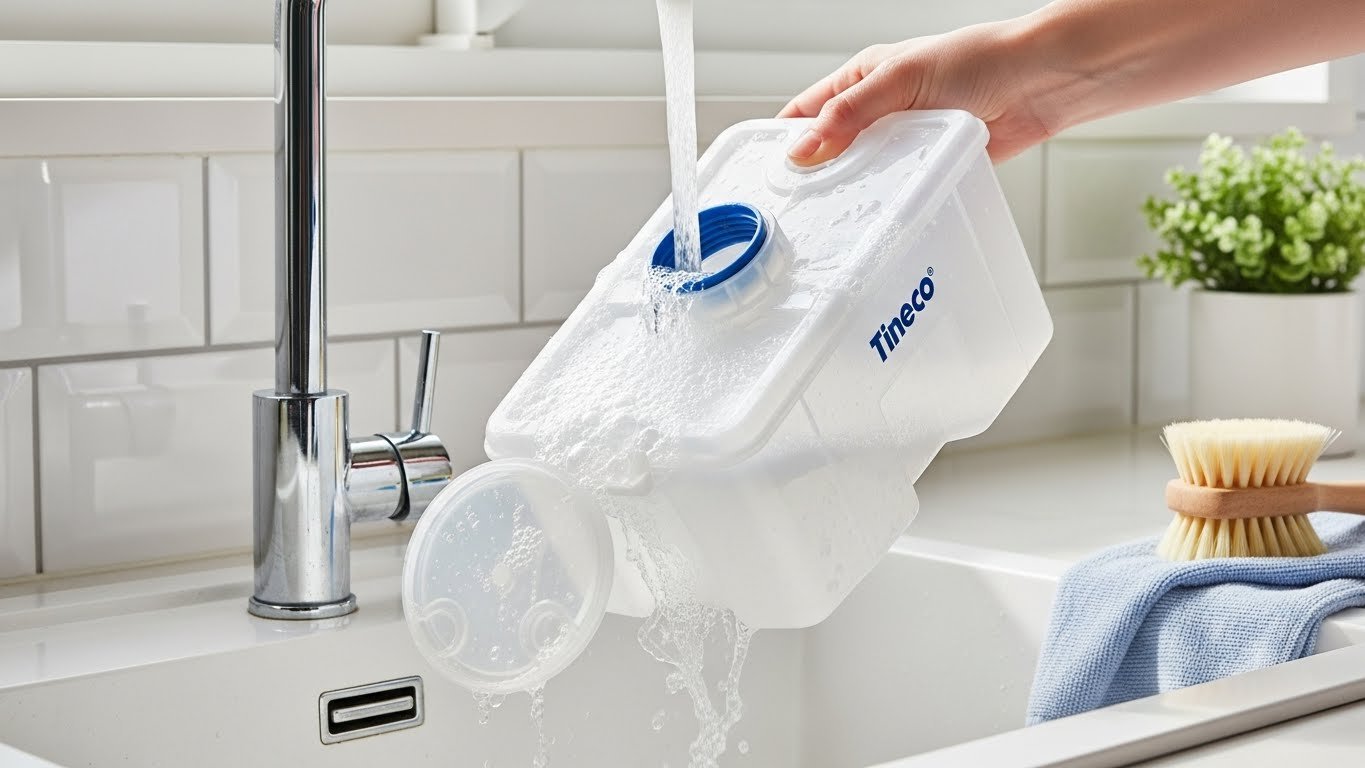
- Empty the dirty water immediately
Self-cleaning maintains the roller but doesn’t replace manual deep cleaning.
Storage Best Practices
Proper storage prevents odor and damage:
- Store your Tineco in a dry, ventilated area
- Remove the roller if storing for extended periods
- Never store with water in the tanks
- Keep away from direct sunlight or heat sources
When to Replace Your Tineco Roller
Even with excellent maintenance, rollers eventually wear out. Replace your roller when you notice:
- Bristles are significantly flattened or missing
- The roller core is cracked or damaged
- Cleaning no longer restores performance
- Persistent odors that won’t go away
- Uneven wear patterns that cause vibration
Genuine Tineco replacement rollers are available through their website and authorized retailers. While third-party options exist, authentic parts ensure compatibility and maintain your warranty.
Advanced Cleaning Tips for Stubborn Issues
Removing Sticky Residue
For gum, adhesive, or sticky spills on your roller:
- Apply a small amount of rubbing alcohol to a cloth
- Gently rub the affected area
- Let sit for 2-3 minutes
- Scrub with a soft brush
- Wash normally with soap and water
Eliminating Persistent Odors
If standard cleaning doesn’t eliminate smells:
- Soak the roller in a solution of baking soda and water (2 tablespoons per cup)
- Let sit for 30 minutes
- Rinse thoroughly
- Spray with diluted vinegar and let air dry
- Ensure complete drying before reinstalling
Deep Sanitizing
For households with allergies or illness:
- Clean the roller normally
- Prepare a solution of 1 part bleach to 10 parts water
- Submerge the roller for 5 minutes (bristle types only—not microfiber)
- Rinse extremely thoroughly
- Dry completely in direct sunlight if possible
Always check your manual before using bleach, as some materials may be damaged.
Comparing Tineco Models: Roller Cleaning Differences
1. Tineco Floor One S3
The S3 features a standard roller that’s straightforward to clean. The quick-release mechanism makes removal simple, and the roller is durable enough for frequent washing.
2. Tineco Floor One S5
The S5 introduced improved roller technology with better debris pickup. The cleaning process is identical to the S3, but the roller material may show wear slightly faster with heavy use.
3. Tineco Floor One S6
The S6 features an enhanced self-cleaning system that reduces manual cleaning frequency. However, the roller still requires regular deep cleaning every 2-3 weeks.
4. Tineco iFloor Series
The iFloor models have a simpler design with fewer smart features. The roller cleaning process is nearly identical, though these models lack the advanced self-cleaning of newer Floor One units.
Environmental and Health Benefits of Clean Rollers
Maintaining a clean roller goes beyond vacuum performance:
Allergen Reduction: Dirty rollers redistribute dust, pollen, and pet dander into your air. Regular cleaning significantly improves indoor air quality.
Bacteria Control: Studies show vacuum rollers can harbor harmful bacteria like E. coli and Staphylococcus. Proper cleaning and drying prevent bacterial growth.
Chemical Reduction: A well-maintained vacuum cleans more effectively, reducing the need for additional cleaning chemicals on your floors.
Waste Reduction: Extending your roller’s lifespan through proper maintenance keeps plastic waste out of landfills.
Troubleshooting: Tineco Roller Cleaning FAQs
Can I put my Tineco roller in the dishwasher?
No. The high heat and harsh detergents in dishwashers can damage the roller bristles and plastic components. Always hand wash with mild soap and warm water.
My roller still smells after cleaning. What should I do?
Odors usually indicate incomplete drying or bacteria in the housing. Remove the roller, clean the housing thoroughly, and ensure the roller dries completely—preferably in direct sunlight. If odors persist, replace the roller.
Can I use vinegar to clean my Tineco roller?
Yes, diluted white vinegar (1:1 with water) is safe and effective for cleaning and deodorizing. Rinse thoroughly afterward to prevent any vinegar smell.
How do I know if my roller is too worn to clean?
Check the bristles. If they’re flat, significantly shorter than when new, or the roller base is cracked, it’s time for a replacement. Cleaning won’t restore severely worn bristles.
Can I speed up the drying process with a hair dryer?
While technically possible, high heat can warp plastic components. If you must speed drying, use a fan or the cool setting on a hair dryer. Air drying is always safest.
Creating Your Tineco Maintenance Schedule
Use this simple schedule to keep your Tineco roller in optimal condition:
After Every Use:
- Remove visible hair and debris
- Run self-cleaning cycle (if available)
- Empty dirty water tank
Weekly:
- Remove and inspect the roller
- Quick wash if needed
- Wipe down housing
Bi-Weekly to Monthly:
- Deep clean roller with soap and water
- Clean brush housing thoroughly
- Check for wear or damage
Every 3-6 Months:
- Inspect for replacement needs
- Deep sanitize all components
- Check other consumable parts (filters, etc.)
Print this schedule and place it near your storage area as a reminder.
Conclusion: Keep Your Tineco Running at Peak Performance
Learning how to clean the Tineco roller properly is one of the simplest ways to maintain your vacuum’s performance and longevity. By following this comprehensive guide, you’ll prevent common issues, extend your roller’s lifespan, and ensure your floors receive the deep cleaning they deserve.
Remember these key points:
- Clean your roller every 1-3 weeks depending on use
- Always allow complete drying before reinstalling
- Address odors and performance issues immediately
- Replace worn rollers promptly for best results
A few minutes of regular maintenance saves money on repairs and replacements while keeping your home cleaner and healthier. Your Tineco is an investment—treat it well, and it will serve you faithfully for years to come.
Frequently Asked Questions
Q: How long does it take to clean a Tineco roller brush?
A: The active cleaning process takes about 10-15 minutes, but you’ll need to allow 24 hours for the roller to dry completely before reinstalling it. Consider cleaning in the evening so it’s dry by the next day.
Q: Can I use bleach to clean my Tineco roller?
A: You can use a heavily diluted bleach solution (1:10 bleach to water ratio) on bristle-type rollers for disinfection, but avoid bleach on soft microfiber rollers as it can damage the material. Always rinse extremely thoroughly and allow complete drying.
Q: Why does my Tineco roller get dirty so quickly?
A: Rapid buildup typically indicates heavy foot traffic, shedding pets, or frequently cleaning high-debris areas. Pre-vacuuming with a regular vacuum for large debris, increasing cleaning frequency, and addressing the source of debris can help reduce roller contamination.
Q: Is it normal for the Tineco roller to smell after use?
A: A slight smell immediately after use is normal, but persistent odors indicate bacteria growth from incomplete drying or infrequent cleaning. Always dry the roller completely and clean it regularly to prevent odor-causing bacteria from establishing.