Quick Answer
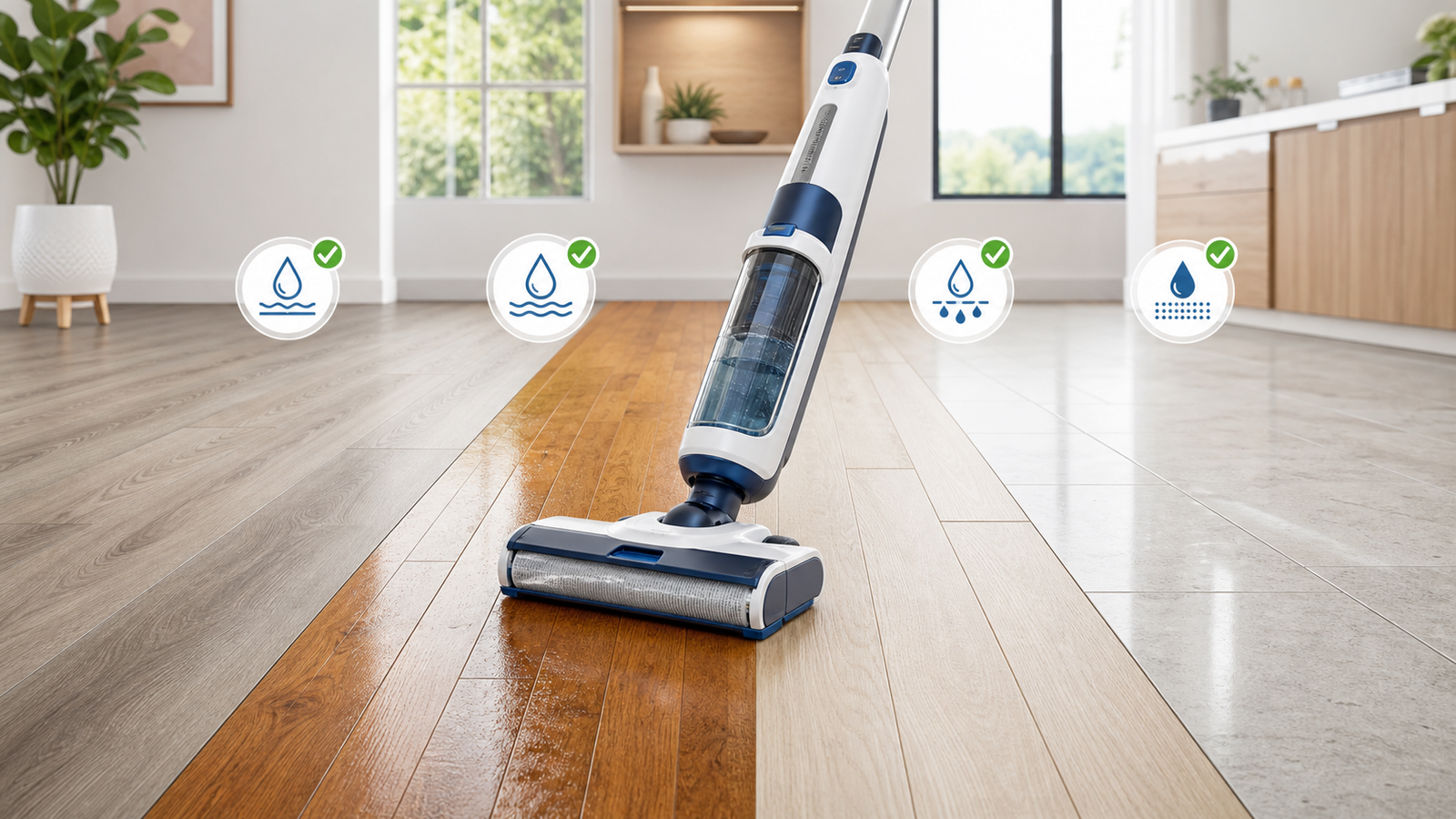
Yes, you can use Tineco on LVP (luxury vinyl plank), sealed hardwood, laminate, and tile — as long as the floor is sealed and in good condition. Tineco's wet/dry vacuum mops (like the Floor One and iFloor series) use controlled water flow and immediate suction, so very little moisture ever sits on the surface. The main things to avoid are unsealed or damaged wood, floors with wide/lifting seams, and letting the machine sit idle on one spot.
Key Takeaways
- Tineco is safe on LVP, sealed hardwood, laminate, vinyl, and tile when used as directed.
- The wet/dry design vacuums up dirty water almost instantly, so floors aren't left soaking like a traditional string mop.
- Unsealed or unfinished hardwood is the one hard-floor type Tineco is not recommended for.
- Laminate and LVP with damaged or lifting seams are more vulnerable to water intrusion — inspect first.
- Use the correct brush roller (soft roller for hardwood/laminate, not a stiff scrubbing brush) to avoid micro-scratches.
- Always run a quick test in a small, hidden area before your first full clean on a new floor.
- Tineco is not designed for carpet, rugs, or unsealed natural stone.
What Is Tineco (and How Does It Clean Floors)?
Tineco makes cordless wet/dry vacuum mops — machines that vacuum dry debris and mop with water in a single pass, then immediately suck the dirty water back into a separate tank. Popular models include the Floor One S3, S5, S6, S7, and the iFloor series.
Unlike a traditional mop, which drags dirty water across the floor and leaves it to air-dry, Tineco applies a thin, controlled stream of clean water through the brush roller and vacuums it up in the same motion. That's the core reason it's considered floor-safe for most hard surfaces: the water dwell time is measured in seconds, not minutes.
Can I Use Tineco on LVP (Luxury Vinyl Plank)?
Yes. Tineco works well on LVP and luxury vinyl tile. Vinyl flooring is naturally water-resistant, and Tineco's low-moisture, quick-suction cleaning cycle is actually one of the safer wet-cleaning methods for this floor type.
Retail support answers for Tineco's Floor One line confirm the machine is designed for use on flat, non-carpeted floors such as vinyl, tile, and sealed wood floors, which includes LVP. Real-world reviewers back this up too — one long-term owner described their Tineco iFloor5 as staying streak-free across vinyl, laminate, and tile in daily use.
Watch out for:
- Loose or unsealed edges/seams. If a plank is lifting or the seam sealant has failed, water can seep underneath.
- Cheap or thin vinyl. A few users have noticed the brush pulling surface coloring off very low-cost vinyl over time — always spot-test first.
- Standing water. Even on LVP, don't let the machine sit in one spot; keep it moving.
Can You Use Tineco on Hardwood Floors?
Yes, but only on sealed hardwood. Tineco's official FAQ states the machines are designed for sealed hardwood floors, using controlled water flow and strong suction so moisture doesn't sit on the surface, and it is not recommended for unsealed or water-sensitive wood surfaces.
That distinction matters because hardwood, unlike vinyl or tile, is a natural material that can swell, warp, or discolor if water penetrates the finish. A proper polyurethane, oil, or wax seal acts as the water barrier — Tineco's job is simply to keep contact time with that sealed surface as short as possible.
What About Engineered Hardwood?
Engineered hardwood has a thin real-wood veneer over a plywood or composite core, topped with the same kind of sealed finish as solid hardwood. If that top layer is properly sealed and in good condition, Tineco is generally fine to use — the same "sealed surface, minimal water contact time" rule applies. Avoid it on engineered floors where the finish has worn through or the edges are chipped, since that's where moisture can reach the core layers.
A Quick Real-World Example
One reviewer at Family Handyman admitted hesitating before running a Tineco over their wood floors for the first time, so they tested it on a small vinyl tile area first, saw how little liquid the machine actually applied, and only then felt confident moving to the wood flooring across the main level. That "test small area first" instinct is exactly the right approach for any sealed wood floor.
Can You Use Tineco on Laminate Floors?
Yes — Tineco is safe for laminate floors that are properly sealed. Laminate is essentially a printed image layer fused under a clear protective wear layer, sitting on a fiberboard core. That core is the vulnerable part: if water gets past the seams, the fiberboard can swell and the planks can peak or separate.
Tineco's own guidance notes it uses minimal water and immediately vacuums it back up, which helps reduce the risk of water seeping into seams, which is important for laminate flooring.
Best practices for laminate:
- Check seams for gaps before cleaning, especially in older installations.
- Keep the machine moving — don't pause over one seam line.
- Wipe up any pooled water immediately if you notice the vacuum missing a spot.
- Skip it on laminate installed in consistently damp areas (like a poorly ventilated basement) unless the manufacturer explicitly rates it for wet areas.
Does Tineco Work on Tile?
Yes. Tile is one of the safest surfaces for a Tineco. Ceramic, porcelain, and ceramic-look tile are fully water-resistant, so the only real consideration is grout. Best Buy's official Q&A response for the Floor One S3 notes the machine can be used on tile floors, though if there are too many gaps on the floor, it may not get the best cleaning result — meaning wide or deep grout lines can trap dirt the brush roller can't fully reach, not that it's unsafe.
Tile bathrooms and kitchens are actually a common recommended use case, since Tineco's support content specifically calls it out as good for handling splashes, hair, and everyday dirt in those rooms.
Can You Use Tineco on Vinyl Flooring in General?
Whether it's sheet vinyl, vinyl tile, or vinyl plank, the answer is consistently yes. Vinyl's non-porous, water-resistant surface pairs well with a wet/dry system, and it's frequently mentioned in Tineco's own support materials as one of the ideal surfaces alongside tile and sealed hardwood.
Tineco Floor Compatibility at a Glance
| Floor Type | Safe to Use? | Key Condition |
|---|---|---|
| LVP (Luxury Vinyl Plank) | ✅ Yes | Seams intact, not lifting |
| Sealed Hardwood | ✅ Yes | Finish must be intact, not unsealed/unfinished |
| Engineered Hardwood | ✅ Yes | Top wear layer sealed and undamaged |
| Laminate | ✅ Yes | Seams sealed, avoid pooling water |
| Tile (ceramic/porcelain) | ✅ Yes | Wide grout lines may need extra passes |
| Vinyl Sheet/Tile | ✅ Yes | Non-porous, low risk |
| Unsealed/Unfinished Wood | ❌ No | Water will penetrate and damage the wood |
| Carpet or Rugs | ❌ No | Not designed for soft flooring |
| Natural/Unsealed Stone | ⚠️ Caution | Check sealant status first |
5 Common Mistakes to Avoid
- Skipping the spot test. Always run the Tineco over a small, inconspicuous area first — especially on a new floor or one you didn't install yourself.
- Using the wrong brush roller. Some Tineco models offer different roller types; a soft microfiber-style roller is gentler on hardwood and laminate than a stiffer scrubbing option.
- Letting the machine idle. Pausing in one spot, even briefly, increases water dwell time exactly where you don't want it.
- Ignoring damaged seams. A cracked laminate seam or lifted vinyl edge is the single biggest risk factor for water damage — inspect before you clean.
- Overfilling the clean water tank with harsh chemicals. Stick to the manufacturer's recommended solution or plain water; strong detergents can dull certain floor finishes over time.
Can I Wash the Tineco Hardwood Brush?
Yes. Most Tineco brush rollers are removable and rinse-safe under running water. After cleaning hardwood or any hard floor, pop the roller out, rinse off any residue, and let it air dry fully before reattaching or storing the machine — this prevents mildew buildup and keeps suction and brush performance consistent. Many current models also include a self-cleaning cycle that flushes the roller automatically after each use, which reduces (but doesn't eliminate) the need for manual rinsing.
Final Verdict
Tineco's wet/dry mop-vacuum system is built around one core principle: minimize how long water sits on the floor. That's exactly why it earns a "yes" across the four floor types most homeowners ask about — LVP, sealed hardwood, laminate, and tile. The exceptions are narrow and predictable: unsealed wood, damaged seams, and soft flooring like carpet. Inspect your floor's finish and seams once, spot-test in a small area, and you're set for regular use.