Quick Answer (TL;DR):
Yes — a Tineco is safe for hardwood floors as long as your floors are sealed (polyurethane or factory-finished), you use a low-water or ECO setting, and you use a pH-neutral, hardwood-safe solution instead of harsh cleaners. Tineco wet-dry vacuums apply a small amount of water and immediately vacuum it back up, so the floor typically dries in 30–90 seconds — far less standing water than a wrung-out mop leaves behind. The real risk isn't the machine; it's using it on unsealed, waxed, oil-finished, or water-damaged wood, or letting it sit still while spraying.
If you've spent money on hardwood, the idea of running a water-spraying machine across it feels wrong. That instinct is healthy. Water and wood have a bad history.
But the question "is Tineco safe for hardwood floors" has a more useful answer than plain yes or no. It's safe conditionally — and once you know the conditions, you'll clean faster and with less risk than you did with a mop and bucket.
What Is a Tineco, and How Does It Actually Work?
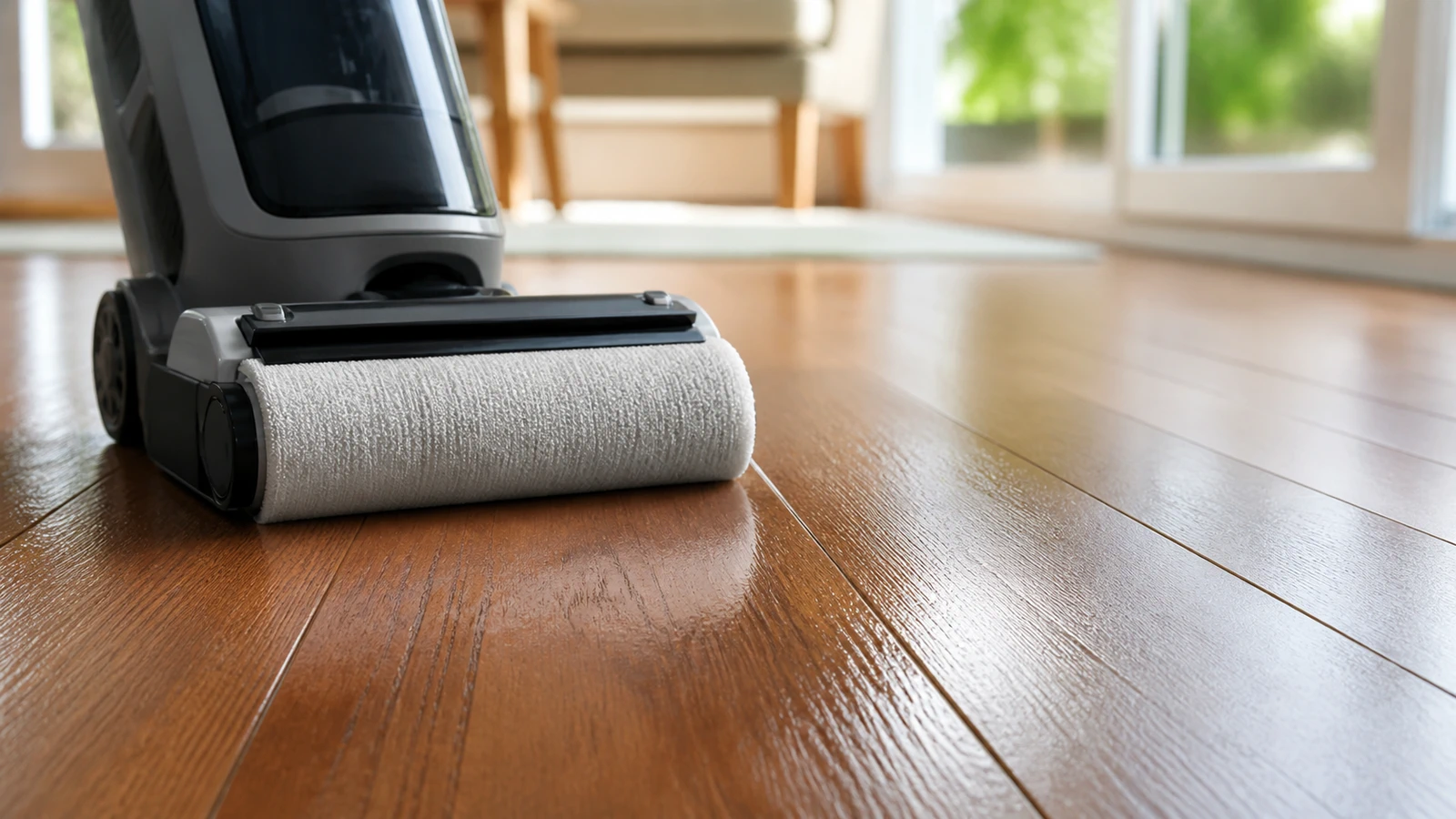
A Tineco is a cordless wet-dry vacuum that washes and vacuums a hard floor in a single pass. It sprays a thin layer of cleaning solution onto a rotating brush roll, scrubs the floor, then immediately suctions the dirty water into a separate tank.
That last part matters most for wood. Unlike a mop, which spreads water and leaves it to evaporate, a Tineco is designed to remove the water it just put down. Popular models include the Floor One S5, Floor One S7 Pro, iFloor 3, and the Floor One Stretch series.
Why the "clean water in, dirty water out" design matters for wood
The two-tank system means your floor never gets re-mopped with dirty water. It also means contact time between moisture and your finish is measured in seconds, not minutes — which is the single biggest factor in whether water harms a wood floor.
Is Tineco Safe for Hardwood Floors? The Honest, Conditional Answer
Yes, Tineco is safe for hardwood floors that are properly sealed and in good condition. The machine's low water output plus instant suction keeps moisture on the surface, where a modern polyurethane finish can easily handle it.
It becomes unsafe in four specific situations:
- Unsealed or bare wood — raw wood absorbs water directly into the grain.
- Wax- or oil-finished floors — water can dull, cloud, or strip these finishes.
- Damaged floors — gaps, cracked boards, lifted seams, or worn-through finish let water underneath.
- Operator error — parking the machine in one spot, over-saturating with max water on a slow pass, or using a non-neutral cleaner.
In practice, most "Tineco ruined my floor" complaints trace back to condition 1 or 3 — a floor that was already vulnerable before the machine touched it.
The 30-second finish test (do this before your first pass)
Here's a field test that costs nothing:
- Pick a hidden spot — inside a closet or under a piece of furniture.
- Drop a few drops of water on the boards.
- Wait 30 seconds, then wipe.
If the water beads up and wipes away clean, your floor is sealed — a Tineco is fine. If it soaks in, darkens the wood, or leaves a mark, stop. Your floor is unsealed, worn, or oil-finished, and you should stick to a barely-damp microfiber or a dry vacuum.
Does a Tineco Leave Hardwood Floors Too Wet?
No — used correctly, a Tineco leaves floors damp for roughly 30–90 seconds, not wet. The suction pulls back the majority of the water it sprays, which is why you'll see the floor go from glossy to matte behind you within a minute.
If your floor is staying wet longer than about two minutes, something is off. Common causes:
- Dirty or saturated brush roll — a soaked roller stops absorbing and starts smearing.
- Clogged suction path — hair wrapped around the roller or debris in the intake.
- Water setting too high for wood (Max mode is built for tile and sealed vinyl).
- Moving too slowly, which lays down more solution per square foot.
- Full dirty-water tank, which reduces suction efficiency.
A quick real-world scenario
A reader with a kitchen-adjacent oak floor complained about cloudy streaks after every clean. The cause wasn't the Tineco — it was a vinegar-and-water DIY solution in the clean tank. Vinegar is acidic and dulls polyurethane over time. Swapping to a pH-neutral hardwood formula fixed the haze within two cleans.
Which Tineco Settings Should You Use on Hardwood?
Use the lowest effective water setting, keep the machine moving, and finish with a suction-only dry pass. Most Tineco models automatically adjust suction based on how dirty the floor is, but water volume is where you should stay conservative on wood.
| Setting / Feature | Recommended for hardwood | Why |
|---|---|---|
| Auto / iLoop mode | ✅ Yes, for daily use | Adjusts water and suction to actual soil level |
| ECO / Low water mode | ✅ Best for wood | Minimum moisture, fastest dry time |
| Max / Deep clean mode | ⚠️ Avoid on wood | Designed for tile, grout, and sealed vinyl |
| Suction-only (water off) | ✅ Use as a final pass | Pulls up residual moisture and speeds drying |
| Self-cleaning cycle | ✅ Every session | Prevents a soggy, smearing brush roll |
Technique that protects the finish
- Keep moving. Never let the machine idle in one spot while spraying.
- Overlap passes by about 30% so you don't leave wet lanes.
- Do one dry pass at the end of each room with water off.
- Vacuum grit first if the floor is sandy — grit plus a spinning brush is how micro-scratches happen.
- Empty and rinse the dirty tank after every use so odor and residue don't return to the floor.
What Cleaning Solution Is Safe in a Tineco on Hardwood?
Use only a pH-neutral, hardwood-safe cleaning solution — either Tineco's own wood-floor formula or a third-party hardwood cleaner labeled safe for polyurethane finishes. Avoid vinegar, ammonia, bleach, dish soap, oil soaps, and steam.
Here's why each one causes trouble:
- Vinegar — acidic; etches and dulls polyurethane over repeated use.
- Ammonia / bleach — strips finish and can discolor wood.
- Dish soap — leaves a film that attracts dirt and causes streaks.
- Oil soaps and "restorer" products — build up a residue that later refinishing can't bond to.
- Excess solution — more soap doesn't mean cleaner; it means residue.
Pro tip:
Use less solution than the bottle recommends. On sealed hardwood, a slightly diluted mix cleans just as well and dramatically reduces streaking.
Is Tineco Safe for Engineered Hardwood and Bamboo?
Yes — engineered hardwood is generally as safe or safer than solid hardwood with a Tineco, because its cross-layered plywood core is more dimensionally stable and resists cupping better than solid planks. Bamboo and strand-woven bamboo are also fine when sealed.
The one caveat: engineered floors have a thin wear layer (sometimes under 2mm). If that layer's finish is worn through in high-traffic lanes, water can reach the veneer. Run the same 30-second water-drop test in those worn areas specifically, not just in a pristine closet.
What about laminate and luxury vinyl plank?
Laminate is the fussier surface here, not hardwood. Laminate's HDF core swells permanently if water gets into seams, so use ECO mode and always finish with a dry pass. LVP and LVT are the most water-tolerant of the group and handle any setting.
Tineco vs. Traditional Mopping on Hardwood: Which Is Riskier?
Mopping is usually riskier. A standard string or sponge mop leaves a visible water film that sits on the finish for several minutes and pushes dirty water into board seams. A Tineco removes most of what it applies within seconds.
| Factor | Tineco wet-dry vac | Traditional mop & bucket | Dry microfiber / dust mop |
|---|---|---|---|
| Water left on floor | Very low (suctioned back) | Moderate to high | None |
| Dry time | ~30–90 seconds | 3–10 minutes | Instant |
| Dirty water reuse | None (two tanks) | Yes — the core flaw | N/A |
| Grit / debris pickup | Vacuums and washes together | Pushes grit around | Good for dust only |
| Risk to sealed wood | Low with correct settings | Moderate | None |
| Risk to unsealed wood | High | High | None |
My unique take: the real hardwood threat is grit, not water
Most hardwood-care advice fixates on moisture. But in day-to-day homes, the finish usually dies from abrasion — sand and grit dragged underfoot, sanding the polyurethane thin in traffic lanes. Once that finish is compromised, then water becomes a problem.
That reframes the Tineco question entirely. Because it vacuums debris while it washes, it removes the abrasive threat in the same pass — something a mop actively makes worse by sliding grit around. Used properly, a Tineco may extend your finish's life rather than shorten it.
Common Mistakes That Damage Hardwood With a Tineco
These are the errors that turn a safe machine into a damaging one:
- Using it on unsealed, waxed, or oil-finished wood. No setting makes this safe.
- Running Max water mode on wood because the floor "looks really dirty."
- Pausing mid-spray, which puddles solution in one spot.
- Never running the self-clean cycle, leaving a permanently soggy brush roll.
- Using vinegar or all-purpose cleaner in the clean-water tank.
- Ignoring gaps and damaged boards where water can slip beneath the surface.
- Skipping the dry pass in rooms with poor airflow.
How Often Should You Use a Tineco on Hardwood Floors?
Once or twice a week is plenty for most homes; high-traffic households with pets or kids can go up to three times a week without issue. Daily wet cleaning isn't necessary and slowly increases moisture exposure at board seams.
Between wet cleans, use a dry pass or a dust mop to lift grit. That combination — frequent dry, occasional wet — is the routine most flooring professionals recommend, and it maps neatly onto how a Tineco is designed to be used.
Key Takeaways
- Yes, Tineco is safe for hardwood floors — as long as they're sealed, undamaged, and cleaned on a low-water setting.
- Run the 30-second water-drop test in a hidden spot before your first use; if water soaks in, don't use a wet vac.
- Use ECO or Auto mode, never Max mode, and finish every room with a suction-only dry pass.
- Only use pH-neutral hardwood-safe solution — vinegar, ammonia, bleach, and dish soap damage or dull polyurethane.
- A properly used Tineco leaves floors dry in 30–90 seconds, less moisture than a wrung-out mop.
- Engineered hardwood and bamboo are fine when sealed; watch worn wear-layers in traffic lanes.
- The bigger long-term threat to hardwood is grit and abrasion, which a Tineco removes as it cleans.
Frequently Asked Questions
Is Tineco safe for hardwood floors?
Yes, Tineco is safe for sealed hardwood floors when used on a low-water or ECO setting with a pH-neutral hardwood cleaner. It sprays a small amount of solution and vacuums it back up within seconds, so moisture doesn't sit on the finish. Avoid using it on unsealed, waxed, or oil-finished wood.
Will a Tineco leave my wood floors wet?
No — a Tineco typically leaves hardwood dry within 30 to 90 seconds because it suctions up the water it applies. If your floor stays wet longer, the brush roll is likely saturated, the dirty-water tank is full, or the water setting is too high.
Can I put vinegar in my Tineco to clean hardwood?
No. Vinegar is acidic and can dull or etch a polyurethane finish over time, and it may also void your Tineco warranty. Use a pH-neutral hardwood floor solution designed for wet-dry vacuums instead.
Hey Google, is a wet vacuum bad for hardwood floors?
A wet vacuum isn't bad for sealed hardwood floors because it removes the water it applies almost immediately. It only becomes a problem on unsealed, waxed, or damaged wood, where moisture can soak into the grain.
Which Tineco model is best for hardwood floors?
Models with adjustable or automatic water control — like the Floor One S5, S7 Pro, and Floor One Stretch — are best for hardwood because you can keep water output low. Any Tineco with an ECO or low-moisture mode plus a self-cleaning brush roll will work well on sealed wood.
Is Tineco safe for engineered hardwood?
Yes, and often safer than on solid hardwood, since engineered planks resist cupping better thanks to their layered core. Just check high-traffic areas for a worn finish first, because engineered wear layers can be thin.