Quick Answer
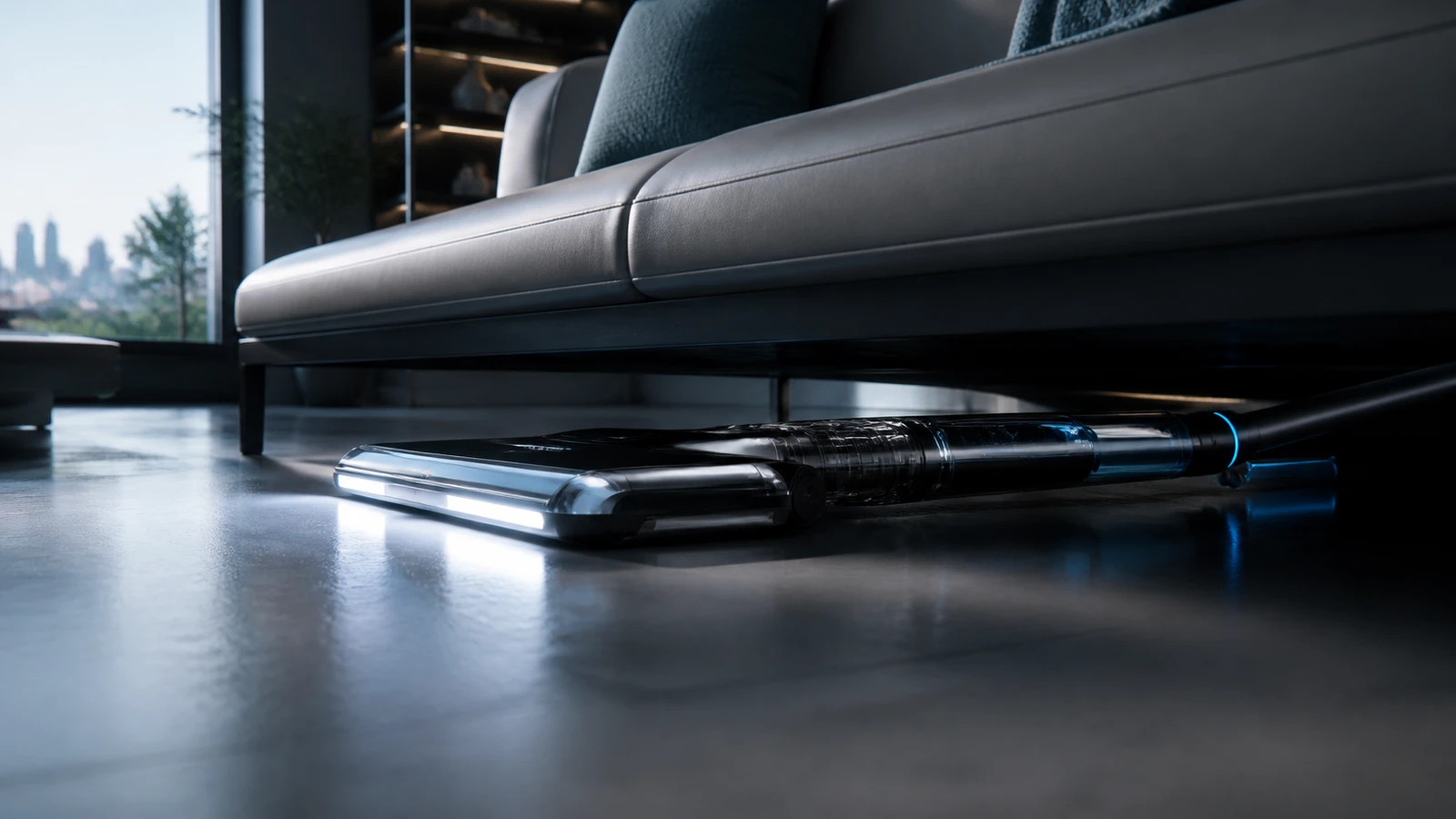
The Tineco Floor One S9 is a cordless wet-dry vacuum — a floor washer that vacuums and mops hard floors in one pass. The 2026 lineup delivers 22kPa of suction, up to 75 minutes of runtime, a 180° lay-flat body, and a hot-water FlashDry self-cleaning cycle, at roughly $699–$899 depending on the model. Steam versions add a 320°F heater for dried-on stains. It's the right buy for homes with mostly hard floors, pets, and daily messes — and overkill for small apartments or carpet-heavy homes.
If you've been comparing floor washers for more than ten minutes, the Tineco Floor One S9 has probably shown up in every list you've read. It's Tineco's flagship 9 Series, and it's genuinely good. The catch is that "S9" isn't one machine — it's five, and the differences matter more than the marketing suggests.
This guide breaks down what the S9 is, how each variant differs, what it's like to live with, and where cheaper models make more sense.
What is the Tineco Floor One S9?
The Tineco Floor One S9 is a cordless wet-dry vacuum cleaner — also called a floor washer or vacuum-mop combo — that suctions dry debris and washes hard floors simultaneously. You fill a clean-water tank, push the machine back and forth, and dirty water goes into a separate tank instead of back onto your floor.
That separation is the whole point. A traditional mop pushes dirty water around; the S9 lays down clean water, scrubs, and immediately lifts the slurry away.
It sits at the top of Tineco's floor-washer range, above the S7 and S6 series, and is defined by four signature technologies:
- iLoop Smart Sensor — reads how dirty the floor is and adjusts suction and water flow in real time
- FlashDry Self-Cleaning — rinses the roller with heated water, then dries it with hot air
- DualBlock Anti-Tangle — dual scrapers that strip hair off the roller as it spins
- SmoothDrive 360° self-propulsion — motorized assist so the head pulls itself forward, back, and around corners
What does "Artist" mean in the model name?
"Artist" is Tineco's design tier, not a performance tier. Artist models get the premium aesthetic housing and finish. Performance is set by the suffixes that follow: Pro (higher-spec cleaning hardware), Steam (adds a steam heater), and Steam Pro (both).
Getting this wrong is the single most common purchase mistake. An "S9 Artist" is the entry model of the series — not the best one.
Tineco Floor One S9 specs at a glance
Here are the core numbers for the mainstream S9 models sold in the US. Treat these as the baseline for any comparison you run.
| Spec | S9 Artist Pro | S9 Artist Steam | S9 Artist Steam Pro |
|---|---|---|---|
| Suction | 22kPa | 22kPa | 22kPa |
| Rated power | 230W | 285W | 285W |
| Modes | Auto / Max / Suction | Auto / Max / Steam / Suction | Auto / Max / Steam / Suction |
| Runtime (Auto) | Up to 75 min | Up to 75 min | Up to 75 min |
| Runtime (Steam) | — | ~30 min | ~30 min |
| Runtime (Quiet) | — | — | Up to 90 min |
| Clean water tank | 1.0 L | 0.88 L | 0.88 L |
| Dirty water tank | 0.75 L | 0.75 L | 0.75 L |
| Charge time | ~3.5 hrs (2A) | ~3.5 hrs (2A) | ~3.5 hrs (2A) |
| Self-clean drying | 5 min, 85°C air | 5 min, 85°C air | 5 min, 85°C air |
| Edge cleaning | Dual-sided | Dual-sided | Triple-sided |
| Lay-flat height | 12.85 cm | 12.85 cm | 12.85 cm |
| Display | LED | LCD | LCD |
| Typical US price | ~$849 | ~$799 | Region-dependent |
Source: Tineco official product specification pages and US retail listings, August 2026.
A useful outside data point: independent testing outlet Vacuum Wars scored the S9 Artist Steam 4.42 overall against a 2.42 average for hard-floor cleaners it has tested, with measured runtime of 75 minutes on low power and a machine weight around 6.1 kg (13.5 lb).
How does the Tineco Floor One S9 work?
The S9 works by combining suction, a spinning wet roller, and a squeegee into one head, with sensors deciding how hard to work. Water flows from the clean tank onto the roller, the roller scrubs, and 22kPa of suction pulls dirty water into a sealed second tank.
Here's the actual sequence in use:
- Fill and power on. Add water (plus solution if you use it) to the clean tank.
- Pick a mode. Auto lets iLoop decide. Max locks in full power. Suction-only handles dry spills.
- Push and pull. SmoothDrive assist means you're guiding it, not shoving it.
- Let the squeegee finish. A front squeegee lifts on the forward stroke and drops on the pull-back stroke to wipe the floor dry — Tineco quotes a 0.2-second reaction time on its StreakFree squeegee.
- Dock it and hit self-clean. The machine rinses its own roller and tubing with heated water, then runs about five minutes of 85°C hot air to dry everything out.
That last step is the feature people underrate. A wet roller left sitting in a dock is what makes cheap floor washers smell after three weeks.
What does steam mode actually add?
Steam mode adds heat to break down dried, sticky residue that room-temperature water just smears. Tineco's HyperSteam heater runs at an internal 320°F, and the company is explicit that this is the heater's internal output temperature, not the temperature of the steam hitting your floor.
In practice, steam earns its keep on specific messes: dried syrup, coffee rings, greasy kitchen film, sticky spots near a highchair. It's less relevant for daily dust and crumbs.
Two trade-offs to plan around: steam mode cuts runtime to roughly 30 minutes, and the heater needs about 60 seconds to warm up before you start.
Which Tineco Floor One S9 model should you buy?
Buy the S9 Artist Steam if you have kids, pets, or a kitchen that sees real cooking — steam is the one feature you can't add later. Buy the S9 Artist Pro if your floors are mostly dust, hair, and light spills, and you'd rather have the larger 1L tank and simpler machine.
Quick decision framework:
- Pets and hair are your main problem → any S9; DualBlock anti-tangle is the shared win
- Dried-on and greasy messes → Steam or Steam Pro
- Large open-plan home, few interruptions → Steam Pro for the 90-minute quiet-mode runtime and triple-sided edges
- Budget matters more than steam → step down to the S9 Master or the S7 series
- You hate refilling → the Floor One Station S9 line adds a station that replenishes hot water mid-clean
Is the Tineco Floor One S9 worth it over the S7?
The S9 is worth the upgrade if you clean large hard-floor areas often; if you clean one small floor once a week, the S7 gives you most of the result for meaningfully less money. The S9's advantages are runtime, suction, self-propulsion, and edge coverage — all of which scale with square footage.
A concrete example: on a 1,800 sq ft single-level home with two dogs, the S9's 75-minute runtime finishes the whole floor plan in one charge. On a 700 sq ft apartment, a 50-minute S7 never runs out either — so you paid for headroom you'll never use.
What are the real downsides of the Tineco Floor One S9?
The honest weaknesses are price, weight, and corner performance. At roughly $699–$899, the S9 costs more than many full-size vacuums, weighs about 6.1 kg, and still can't fully clean a true 90° interior corner.
What reviewers and owners consistently flag:
- True corners stay imperfect. Straight edges along baseboards and cabinets clean well; the inside of a corner may keep a thin residue depending on your approach angle.
- It's a hard-floor tool. Sealed hardwood, tile, laminate, vinyl, and stone are fine. It is not a carpet cleaner.
- Ongoing consumables. Rollers, filters, and cleaning solution are recurring costs. Budget for them.
- Empty the dirty tank every time. Leaving hair soup in a 0.75L tank overnight is the fastest way to create an odor problem.
- Steam needs patience. The warm-up and the halved runtime are real constraints, not marketing footnotes.
How do you maintain a Tineco Floor One S9?
Maintain the S9 by running self-clean after every session, emptying the dirty tank immediately, and deep-cleaning the roller and filter weekly. The self-clean cycle handles most of it, but it doesn't empty the tank for you.
A maintenance rhythm that works:
- After every use: dump and rinse the dirty water tank, then run the self-clean and drying cycle in the dock.
- Weekly: pull the roller, rinse it under the tap, clear the DualBlock scrapers, and rinse the filter. Let both air-dry fully.
- Monthly: wipe the clean-water tank to prevent film buildup and check the squeegee edge for nicks.
- Every 6–12 months: replace the roller and HEPA filter — sooner if you're cleaning heavy pet hair.
Do you have to use Tineco cleaning solution?
No, plain water works, and Tineco's own solution is optional. Avoid vinegar, bleach, oil soaps, and foaming detergents — foam confuses the dirty-water separation and acids can damage seals and finished floors.
If you want a cleaner scent without risk, use the manufacturer's solution at the dosage printed on the bottle. Overdosing causes streaks, not cleaner floors.
Our take: the S9's best feature isn't suction
Here's the angle most reviews miss. The Tineco Floor One S9's most valuable feature is the hot-air drying cycle, not the 22kPa suction number. Suction differences between premium floor washers are marginal in real homes — you will not feel 22kPa versus 20kPa on a kitchen floor.
What you will feel, six months in, is whether the machine smells. Floor washers get abandoned in closets for exactly one reason: the roller stays damp, bacteria colonize it, and the whole machine turns sour. Every floor washer cleans well in month one.
So when comparing the Tineco Floor One S9 against rivals, weight the self-cleaning and drying system heavily and treat the suction spec as a tiebreaker. That's the variable that decides whether you're still using this thing in year three.
Key Takeaways
- The Tineco Floor One S9 is a cordless wet-dry vacuum that vacuums and mops hard floors in a single pass.
- Core specs across the lineup: 22kPa suction, up to 75 minutes runtime, 180° lay-flat design, 0.88–1.0L clean water tank.
- "Artist" is a design tier — Pro, Steam, and Steam Pro are what actually change performance.
- Steam mode (320°F internal heater) handles dried and greasy messes but cuts runtime to about 30 minutes.
- Expect roughly $699–$899 in the US depending on model and promotion.
- Real limitations: weight (~6.1 kg), imperfect interior corners, hard floors only, and ongoing consumable costs.
- The FlashDry self-cleaning and hot-air drying cycle is the feature that determines long-term ownership satisfaction.
Frequently Asked Questions
Is the Tineco Floor One S9 worth the money?
Yes, for homes with mostly hard floors, pets, or frequent spills. The 75-minute runtime and self-cleaning cycle make daily use realistic rather than a chore. For a small apartment or a carpet-heavy home, a cheaper S7 or a standard vacuum is the better value.
Can I use the Tineco Floor One S9 on hardwood floors?
Yes, on sealed hardwood. The S9 releases a controlled amount of water and immediately suctions it back up, so floors dry quickly. Avoid steam mode on unsealed, waxed, or damaged wood, and always check your flooring manufacturer's guidance first.
How long does a Tineco Floor One S9 battery last on one charge?
Up to 75 minutes in Auto mode, about 90 minutes in Quiet mode on the Steam Pro, and roughly 30 minutes in Steam mode. Recharging takes about 3.5 hours with the 2A quick charger. Real-world runtime drops when you use Max mode heavily.
What's the difference between the Tineco Floor One S9 Artist and the S9 Artist Steam?
The Steam model adds a 320°F HyperSteam heater and an LCD display for dried-on and greasy messes; the standard Artist model doesn't have steam. Steam models also use a slightly smaller 0.88L clean water tank. Everything else — 22kPa suction, anti-tangle roller, self-cleaning — is shared.
Does the Tineco Floor One S9 clean carpet?
No. The Tineco Floor One S9 is designed for bare and hard floors like tile, sealed hardwood, laminate, vinyl, and stone. Use a dedicated carpet cleaner or an upright vacuum for rugs and wall-to-wall carpet.
Do I need to clean the Tineco Floor One S9 after every use?
Empty the dirty water tank after every session and run the self-clean cycle — that's it for daily care. Deep-clean the roller and filter weekly, and let both dry fully before reinstalling. Skipping the tank dump is the number one cause of odor complaints.